For several years now, biblical scholars have been rediscovering the importance of the Old Latin versions and the Vulgate.
“Divine Election in the Latin Bible”
Taking advantage of the presence of the Rev. Dr. Kevin Zilverberg, as a visiting professor of the doctoral program, the École’s Directorate organized a very instructive symposium on the 15th of December.
— 9:30–10:30 a.m. : Lukasz Popko, ÉBAF: “Divine Elections: Bibel Lots and the Roman Civic Sortitio”
— 10:45–11:45 a.m. : José Manuel Cañas Reíllo, Spanish National Research Council (CSIC), Madrid: “Election in the Book of Judges: The Cases of Gideon and Samson”
— 3:00–4:00 p.m. Kevin Zilverberg, University of St. Thomas, St. Paul, Minnesota, USA: “Praedestinatus est Filius Dei (Rom 1:4): The Biblical Bases for Augustine’s Teaching on Divine Election”
— 4:15–5:15 p.m. Pablo Toribio, Spanish National Research Council (CSIC), Madrid: “Divine Filiation as Election: Johann Crell’s Interpretation of the phrase filius Dei in its Confessional Context”
Workshop on the Translation of the Vulgate
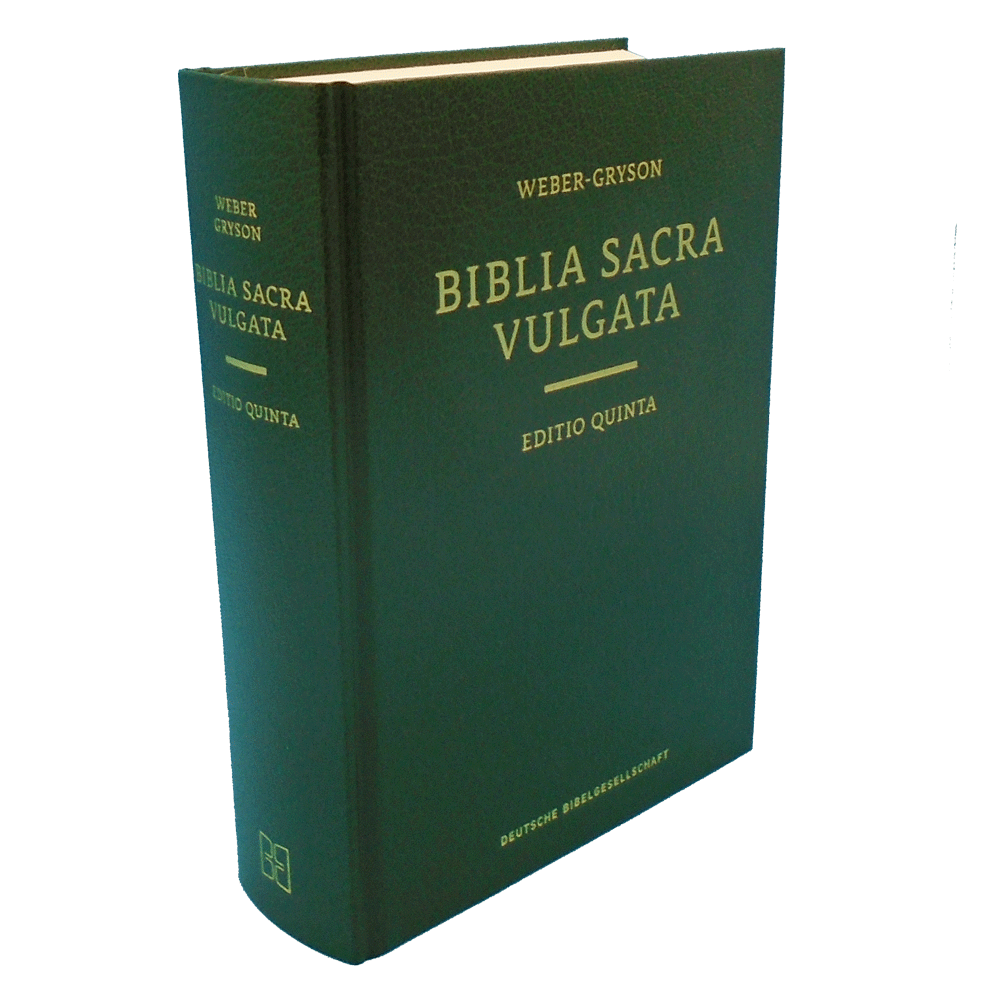
For two years now, at the program’s main office, we have been devoting a two-hour weekly seminar to the problems that the Latin text presents to translators. This is an opportunity to test the BEST translator’s “table of commandments” developed at the beginning of the program (HERE, p.24-30)
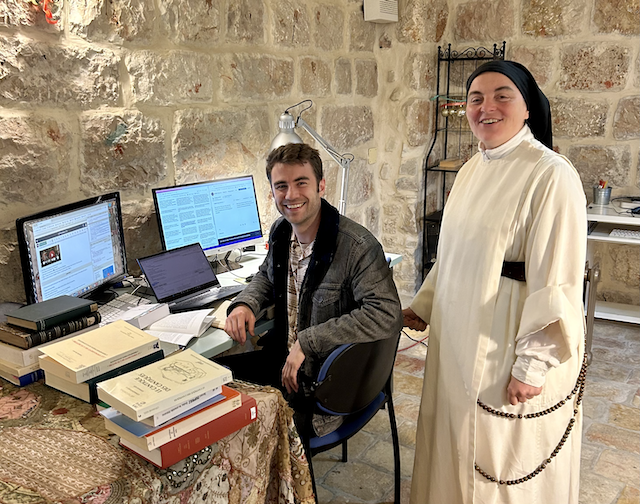
A scientific assistant to our programme, and a very active member of our seminar, SImon Monteillet lends himself to a brief interview.
Who are you ?
I am 28 years old and after a degree in philosophy at the Pontificia Universidad Católica del Ecuador and studies at the Ecole Normale Supérieure, in Paris, I am now doing a doctorate at the Ecole Pratique des Hautes Etudes (EPHE) at the Laboratoire d’Etudes sur les Monothéismes under the direction of Olivier Boulnois. Previously, I worked on Saint Augustine and his use of substantia in heresiological debates, more precisely Manichaean and Arian. Now I am studying the uses of this term in the Latin Church Fathers.
What do you do at EBAF?
The BEST programme intends to make the biblical polyphony heard by highlighting the nuances specific to each tradition. Made aware of the importance of the Latin language in the structuring of Christian thought, I am given the opportunity to work as a research assistant on the project, revising and enriching the translations of the Vulgate prepared by my predecessors. For me, whose entire intellectual life is bilingual, and in fact trilingual with Latin, this is exciting!
What is your Philosophy of Translation?
If translating is the condition of possibility of understanding among men, because there is no human relationship without a certain understanding, nor understanding without a common language, a translation can also be perceived as a betrayal or as a violence when, for example, a powerful group imposes its language on the others, translating being no longer a matter of sharing but of subjugation.
BEST does not envisage translation negatively. Rather than considering translation as a way to remedy the confusio linguarum, it is based on a positive conception of the plurality of languages and versions.
Moreover, the project does not approach translation as a conquest by a power that would impose its unique language: diversity of languages does not amount to schisms! Certainly, the episode of the Tower of Babel is known to have led to the diversity of languages, but we cannot forget that there is a language that unites them all, the very language that Augustine calls charity (See St. Augustin, Homilies on the Gospel According to John VI, 10 (BA, 71, p. 35))